Standards, phrasing, and the jazz ballad: Over the Rainbow (Lorez Alexandria)
Listen to the song
- YouTube - https://www.youtube.com/watch?v=07svdMmaQbM
- Spotify - https://open.spotify.com/track/4rnTlPjfyaDtKVhq9ZYryy?si=bcbff13656ac43f5
- Apple Music - https://music.apple.com/us/song/over-the-rainbow/1444164049
- Amazon - https://music.amazon.com/albums/B000W15BNS?marketplaceId=ATVPDKIKX0DER&musicTerritory=US&ref=dm_sh_1lz8YoMjapO1PSPL3SaW0Iyma&trackAsin=B000W190LM
Other links
- Pete Kelly’s Blues (1955)
- “Sing a Rainbow,” Peggy Lee
Key takeaways
- Trist and Elaine discuss Lorez Alexandria’s take on the jazz classic “Over the Rainbow,” which introduces an intro from “Sing a Rainbow,” performed by Peggy Lee in “Pete Kelly’s Blues.” Topics include the relationship with theme and variation, back phrasing, and the push and pull with jazz instrumentalists
- In the Mailbag portion, Trist and Elaine reflect on the importance of creativity and expression in helping people connect, discover their true selves, and understand the human experience. They go on to discuss what type of activity to them brings meaning and connection in the context of an artist’s contribution to the world
About us
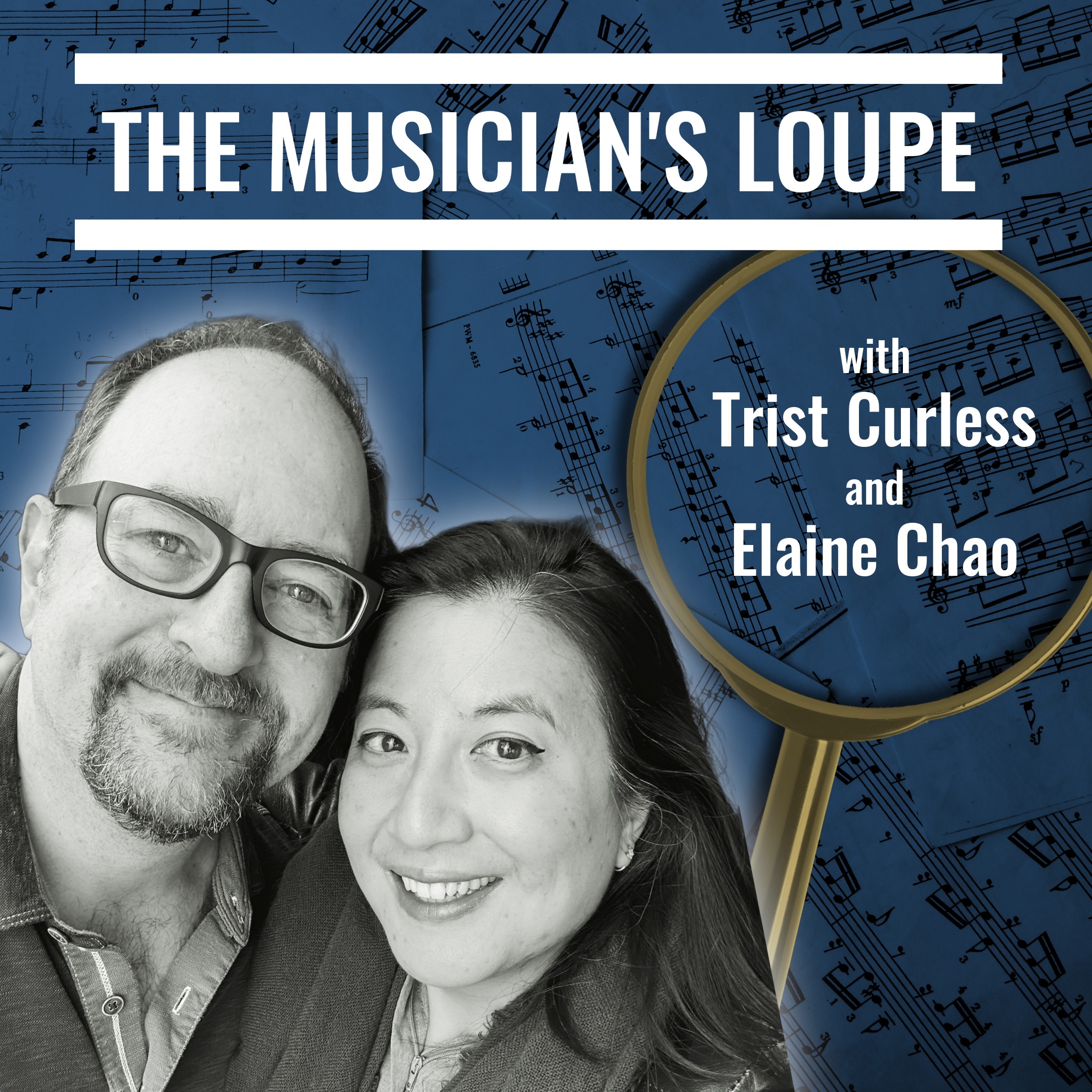
Trist Curless is a Los Angeles-based vocalist, educator, and sound engineer. As a performer, Trist has toured worldwide as a co-founder of the pop-jazz vocal group m-pact and a 10 year member of the Grammy-award winning The Manhattan Transfer. In addition to these two vocal powerhouse groups, he’s also performed with Take 6, Bobby McFerrin, New York Voices, Vox Audio, Naturally 7, and The Swingle Singers. His latest venture, The LHR Project, is a new vocal group collective celebrating legendary jazz vocal group Lambert, Hendricks, and Ross.
As an audio engineer, Trist has toured nationally with several vocal groups and bands in a large variety of venues, working for Grammy award winners Pentatonix and Take 6, as well as prominent a cappella vocal groups Straight No Chaser, VoicePlay, and Accent.
Elaine Chao, M.Ed is a San Francisco Bay Area-based vocalist, multi-instrumentalist, vocal percussionist, and songwriter whose career spans a cappella, contemporary worship, and classical music. She has leveraged her training in classical and choral music over the course of her contemporary performance, including in orchestras for musical theatre and in sacred spaces. In addition to music, she also is a martial artist and published author. She currently leads a product management team at a major software company dedicated to creative expression. All statements in this podcast are her own and do not reflect the opinions of her employer.
Transcript
Elaine: Hey, Trist!
Speaker:Elaine: So what do you have for us this week?
Speaker:Trist: Oh, Elaine, Elaine, Elaine, I have, you know, in the Great
Speaker:Trist: American Songbook, kind of these jazz standards that, kind of
Speaker:Trist: make up the Great American Songbook, but most of the songs
Speaker:Trist: come from shows.
Speaker:Trist: Okay.
Speaker:Trist: Yeah.
Speaker:Trist: From classic American theater.
Speaker:Elaine: Um, Rodgers and Hammerstein occasionally.
Speaker:Trist: And there's.
Speaker:Trist: Yeah, there's there's these standard songs that you hear.
Speaker:Trist: I've always loved it when the
Speaker:Trist: artists, they're they're taking
Speaker:Trist: it from the show and kind of
Speaker:Trist: making it their own, making it a
Speaker:Trist: little more jazzy, etc. but I
Speaker:Trist: love when, especially as an
Speaker:Trist: intro, sometimes as middle or
Speaker:Trist: the end, which is really
Speaker:Trist: creative, they actually include
Speaker:Trist: the verse.
Speaker:Elaine: Oh, okay.
Speaker:Trist: So not a verse like verse chorus, verse, chorus bridge
Speaker:Trist: like a pop song, but like the intro verse that may be in the
Speaker:Trist: show a character's had.
Speaker:Trist: It's a little intro to the song we all know.
Speaker:Trist: You know what I'm talking about?
Speaker:Elaine: I think I do.
Speaker:Elaine: But, you know, set us up.
Speaker:Elaine: What are we listening to this week?
Speaker:Trist: If I really done my research, I
Speaker:Trist: could have had a good example to
Speaker:Trist: let you know exactly what I
Speaker:Trist: mean.
Speaker:Trist: But this particular song that I've chosen today is a very,
Speaker:Trist: very famous, very popular song that does have a verse.
Speaker:Trist: And actually the verse is done fairly often.
Speaker:Trist: However, the version of the song
Speaker:Trist: that I've chosen has a verse
Speaker:Trist: that's different.
Speaker:Trist: It's a verse from somewhere else.
Speaker:Trist: Completely.
Speaker:Elaine: Oh, okay.
Speaker:Elaine: So tell us about what we're listening to.
Speaker:Trist: So this song for today is "Over the Rainbow."
Speaker:Elaine: Okay. I know exactly that song.
Speaker:Trist: Everyone knows this song from The Wizard of Oz.
Speaker:Trist: (Yes.) And, um, there is a verse
Speaker:Trist: that was sung in the movie, and
Speaker:Trist: many versions of it, of people
Speaker:Trist: who've recorded have sung a
Speaker:Trist: verse.
Speaker:Trist: However, this one does not have that same verse.
Speaker:Trist: This comes from a song from the
Speaker:Trist: movie "Pete Kelly's Blues" from
Speaker:Trist: 1955.
Speaker:Trist: It was sung by Peggy Lee.
Speaker:Elaine: Ooh, okay.
Speaker:Elaine: I know Peggy Lee. Thanks to coworker.
Speaker:Elaine: Former coworker of mine.
Speaker:Trist: And so she uses she uses the
Speaker:Trist: song, whether whether Lorez
Speaker:Trist: Alexandria, our singer today,
Speaker:Trist: thought of that herself, I don't
Speaker:Trist: know.
Speaker:Trist: There's no credit or note.
Speaker:Trist: I've never read anything about whose idea this is.
Speaker:Trist: But instead of the normal intro /verse to Over the Rainbow, the
Speaker:Trist: song from Pete Kelly's Blues, sung by Peggy Lee, called "I Can Sing a Rainbow,"
Speaker:Trist: is the song that she has chosen, and you can listen to it
Speaker:Trist: now.
Speaker:Elaine: Awesome.
Speaker:Elaine: So we're going to drop the links to all of these songs inside of
Speaker:Elaine: the show notes.
Speaker:Elaine: Please take a pause, listen to it, and come on back.
Speaker:Elaine: But before we take that pause, Trist, can you tell us about how
Speaker:Elaine: we should be listening to music?
Speaker:Trist: Well, what we want to do is we want to upgrade.
Speaker:Trist: - Upgrade.
Speaker:Trist: - Everyone loves an upgrade.
Speaker:Trist: An upgraded car rental.
Speaker:Trist: Upgraded airline seat.
Speaker:Trist: I do love that.
Speaker:Trist: Upgrade your listening, If you have a moment to grab the nicer
Speaker:Trist: headphones, to put it on the nicer speakers when you're going
Speaker:Trist: to listen to this before we talk about it, please do.
Speaker:Trist: I know not everyone can because you listen to this on your drive
Speaker:Trist: into work, or you drive home from work or wherever, or taking
Speaker:Trist: a walk or a jog.
Speaker:Trist: Thank you for joining us.
Speaker:Trist: However you join us.
Speaker:Trist: But if you have the ability to upgrade your listening, please
Speaker:Trist: do so now.
Speaker:Trist: We like to support listening to the best sound possible.
Speaker:Elaine: Awesome.
Speaker:Elaine: And so with that, we will be right back.
Speaker:Elaine: And we are back.
Speaker:Elaine: Okay. Holy cows.
Speaker:Elaine: I am absolutely obsessed with the song.
Speaker:Elaine: Oh my goodness.
Speaker:Elaine: Oh, I am, I am.
Speaker:Elaine: What do you say?
Speaker:Elaine: What do the kids say today?
Speaker:Elaine: Like I'm destroyed.
Speaker:Elaine: I'm wrecked, you know, um, but, yeah.
Speaker:Trist: Kids said that someday.
Speaker:Elaine: Yeah, I, you know, I was absolutely destroyed because I
Speaker:Elaine: looked this up right afterwards and I was like, I need to see
Speaker:Elaine: her in person.
Speaker:Elaine: And it turns out that she is not a modern singer, right?
Speaker:Elaine: I was like, "Aaaugh, she's not a modern singer!" Um, so I was
Speaker:Elaine: very frustrated by that, but oh my goodness, such a good track.
Speaker:Trist: Yeah, I love using her for an example for students, um, if I'm
Speaker:Trist: teaching about phrasing in jazz, (Mmhm.) Um, you know, there's
Speaker:Trist: singing everything kind of right in the beat where it's written.
Speaker:Trist: And then in jazz, a large
Speaker:Trist: percentage of jazz is kind of
Speaker:Trist: back phrasing.
Speaker:Trist: So as the beat happens, you're not quite singing yet.
Speaker:Trist: You sing a little bit later than the song was written.
Speaker:Trist: (Mhm.) Um, and sometimes there's
Speaker:Trist: you phrase ahead, you come in a
Speaker:Trist: little bit before just there's
Speaker:Trist: like a push and pull when you're
Speaker:Trist: singing jazz tunes, especially
Speaker:Trist: ballads.
Speaker:Trist: and there have been many greats
Speaker:Trist: over the years who really will
Speaker:Trist: lay back.
Speaker:Trist: but there are a few that do it as much as, as her.
Speaker:Trist: I feel like in a lot of her recordings have this thing where
Speaker:Trist: if you sing along in your head with the chord changes where the
Speaker:Trist: melody kind of usually is.
Speaker:Trist: Sometimes they're an entire bar
Speaker:Trist: entire phrase ahead before she
Speaker:Trist: starts singing.
Speaker:Elaine: Yeah, yeah.
Speaker:Trist: Yeah. So I love that.
Speaker:Trist: I love that about her singing.
Speaker:Trist: And it never feels like it's super forced.
Speaker:Trist: It still feels really natural.
Speaker:Elaine: Yeah, that was something that I definitely wrote down,
Speaker:Elaine: especially as I was listening to it the second or third time.
Speaker:Elaine: Just the relationship between her and the piano in the first
Speaker:Elaine: half of the song.
Speaker:Elaine: There was something that was very, uh, you were talking about
Speaker:Elaine: push and pull and and I wrote that down as well.
Speaker:Elaine: But I was just thinking about the relationship and just how
Speaker:Elaine: thoughtful and how responsive the pianist has to be.
Speaker:Elaine: And like the singer also to the
Speaker:Elaine: pianist, right in, in that kind
Speaker:Elaine: of case where there's a lot of,
Speaker:Elaine: I'd say just like nuance in how
Speaker:Elaine: that relationship happened
Speaker:Elaine: because both of them are out of
Speaker:Elaine: time.
Speaker:Elaine: Right?
Speaker:Elaine: Like the piano isn't seriously holding any time.
Speaker:Elaine: I feel like that time comes in about midway through the song as
Speaker:Elaine: the rest of the ensemble comes in, but there's definitely a lot
Speaker:Elaine: more of that freedom when it comes to this.
Speaker:Elaine: And as someone who consistently plays to a click because that's
Speaker:Elaine: how we keep the band together, that's something that I'm like,
Speaker:Elaine: oh my goodness.
Speaker:Elaine: Like, talk about being off the click, right?
Speaker:Elaine: Um, but it it was so beautiful.
Speaker:Elaine: It was incredibly beautiful.
Speaker:Trist: Yeah, I do like and I'd kind of forgotten until recently
Speaker:Trist: listening again and, how in these tunes it's pretty common.
Speaker:Trist: You'll hear in any of these kind
Speaker:Trist: of slower ballads like this,
Speaker:Trist: because whether it's on a
Speaker:Trist: recording or in a live space,
Speaker:Trist: you know, these really kind of
Speaker:Trist: long, pretty things you need,
Speaker:Trist: the band needs to kind of change
Speaker:Trist: something up just to keep you
Speaker:Trist: from, I mean, not literally
Speaker:Trist: falling asleep.
Speaker:Trist: I mean, maybe, but, you know, just just from tuning out
Speaker:Trist: because it's just so, you know, doom doom doom doom.
Speaker:Trist: It's like so.
Speaker:Trist: Like the harmonic rhythm is so slow that at least then on the
Speaker:Trist: bridge "Dohn do do do do do do do" a little bit more.
Speaker:Trist: Almost two beat not even quite
Speaker:Trist: four straight swinging but just
Speaker:Trist: has a little more motion for
Speaker:Trist: those.
Speaker:Trist: "Someday I'll wish upon a star," right?
Speaker:Trist: Yeah.
Speaker:Trist: Um, I love that.
Speaker:Trist: It's like, okay, finally there's a little motion that happens.
Speaker:Trist: And then also very elegantly pulls out of that.
Speaker:Trist: So I dig how the bridge kind of just moves us ahead a little
Speaker:Trist: bit, like, okay, just about I was about to be mesmerized
Speaker:Trist: falling asleep to this, you've kind of kicked me in the rear a
Speaker:Trist: little bit and we're moving a little bit, so I like that.
Speaker:Elaine: Well, it's interesting because I don't necessarily think of- I
Speaker:Elaine: mean, I was mesmerized, I don't think I was falling asleep in in
Speaker:Elaine: that first section there.
Speaker:Elaine: I think part of it was that, I was thinking about this.
Speaker:Elaine: I don't know, maybe the third
Speaker:Elaine: time through, as I was listening
Speaker:Elaine: to it, just how familiar the
Speaker:Elaine: song was.
Speaker:Elaine: And at the same time, that familiarity, I think, with what
Speaker:Elaine: you know, I grew up watching The Wizard of Oz, right?
Speaker:Elaine: I grew up with with Judy
Speaker:Elaine: Garland's version and of course,
Speaker:Elaine: all of these other versions that
Speaker:Elaine: we've heard since that have
Speaker:Elaine: permeated our pop culture, that
Speaker:Elaine: with this knowledge of what the
Speaker:Elaine: melody should be, it contributes
Speaker:Elaine: to my appreciation of what she
Speaker:Elaine: made it.
Speaker:Elaine: And I think that was something that was as a musician, as a
Speaker:Elaine: vocalist, as a jazz lover, that this was something that just
Speaker:Elaine: blew my mind in thinking about her interpretation of the melody
Speaker:Elaine: and how that interplayed with my knowledge of the melody as well.
Speaker:Elaine: Which is, I think, part of the
Speaker:Elaine: reason why standards are so
Speaker:Elaine: important, right, in jazz music
Speaker:Elaine: is that the variations only come
Speaker:Elaine: because of your knowledge of the
Speaker:Elaine: theme.
Speaker:Elaine: And if I think about classical
Speaker:Elaine: music and theme and variations,
Speaker:Elaine: it's like, okay, great, I have
Speaker:Elaine: the theme, I play it all the way
Speaker:Elaine: through and now I have variation
Speaker:Elaine: one through five, and then I go
Speaker:Elaine: back to the initial one to
Speaker:Elaine: remind you about what the
Speaker:Elaine: concept was.
Speaker:Elaine: And I think in this case it's a very similar kind of thing.
Speaker:Elaine: This is a variation of something that is so solidly in the core
Speaker:Elaine: of our pop culture understanding and our jazz culture
Speaker:Elaine: understanding that it's like, oh, okay, cool that.
Speaker:Elaine: Wow.
Speaker:Elaine: Wow.
Speaker:Elaine: Right?
Speaker:Trist: Yeah, that's that's my general attraction to jazz music anyway.
Speaker:Trist: I mean, I love there's
Speaker:Trist: definitely a place for, you
Speaker:Trist: know, new creations and new
Speaker:Trist: melodies and then improvising on
Speaker:Trist: new things.
Speaker:Trist: But man, when it's standard stuff that, you know, is just
Speaker:Trist: ingrained in you and you really know you're right, you really
Speaker:Trist: appreciate the differences.
Speaker:Trist: And like I said to the thing I
Speaker:Trist: was talking about in terms of
Speaker:Trist: phrasing, we all really know,
Speaker:Trist: even in the bridge, when it's
Speaker:Trist: moving ahead.
Speaker:Trist: It's that da da da da da da da
Speaker:Trist: da da da da da da da da da da
Speaker:Trist: da.
Speaker:Speaker 3: Da da.
Speaker:Trist: Da da da da da.
Speaker:Speaker 3: Da da da da da da.
Speaker:Trist: It's not.
Speaker:Trist: You know that's all that there is.
Speaker:Trist: And she's so far removed from doing that.
Speaker:Trist: And yet because that's in you you know that's there.
Speaker:Trist: You really can appreciate where
Speaker:Trist: she puts it and how she makes
Speaker:Trist: the whole thing hers, makes it
Speaker:Trist: her own.
Speaker:Elaine: Yeah. And I think that there was
Speaker:Elaine: something that was very tender
Speaker:Elaine: about her delivery in this,
Speaker:Elaine: which I think, you know, maps
Speaker:Elaine: really well.
Speaker:Elaine: But even even more than the
Speaker:Elaine: young child who, you know,
Speaker:Elaine: Dorothy Gale in The Wizard of
Speaker:Elaine: Oz.
Speaker:Elaine: This was like a more mature version of that, right?
Speaker:Elaine: Like her voice.
Speaker:Elaine: Actually, I will come back to this, but, her voice.
Speaker:Elaine: Oh, my goodness.
Speaker:Elaine: Her voice.
Speaker:Elaine: Right as I was listening to this.
Speaker:Elaine: Um, there were elements of her voice that was very reminiscent
Speaker:Elaine: of Ella Fitzgerald for me.
Speaker:Elaine: And there were some turns that
Speaker:Elaine: she had that were very
Speaker:Elaine: reminiscent.
Speaker:Elaine: And when I looked her up, I was
Speaker:Elaine: like, "Oh my goodness, they were
Speaker:Elaine: contemporaries," right?
Speaker:Elaine: Had they sung that same festivals, etc.?
Speaker:Elaine: But there was also this, this,
Speaker:Elaine: um, husky quality to her voice,
Speaker:Elaine: almost like a rasp, like a very
Speaker:Elaine: light rasp.
Speaker:Elaine: Right?
Speaker:Elaine: That made it so unique.
Speaker:Elaine: And so when she was singing, it wasn't a belting.
Speaker:Elaine: It wasn't that like bell-like,
Speaker:Elaine: incredibly clear voice that Ella
Speaker:Elaine: Fitzgerald had.
Speaker:Elaine: It was more of a tender,
Speaker:Elaine: thoughtful, interpretation of
Speaker:Elaine: this song.
Speaker:Elaine: And I'm actually just kind of curious about the rest of her
Speaker:Elaine: discography, about whether she has that same level of
Speaker:Elaine: tenderness or thoughtfulness, or if this is just like, hey, this
Speaker:Elaine: is a part of her range, and she has so much behind her.
Speaker:Trist: Right.
Speaker:Trist: A lot more like Sarah Vaughan to me.
Speaker:Trist: Mhm.
Speaker:Trist: Um, kind of that darker.
Speaker:Elaine: Yeah.
Speaker:Trist: so and the feel as well.
Speaker:Trist: I don't know a lot about her.
Speaker:Trist: even you were asking about
Speaker:Trist: pronunciation of her name being
Speaker:Trist: short for Dolores, but, I've
Speaker:Trist: always just called her Lorez
Speaker:Trist: Alexandria.
Speaker:Trist: Um, so.
Speaker:Elaine: As opposed to Lorez Alexandria.
Speaker:Trist: Yeah, right.
Speaker:Trist: Because it's short for Dolores.
Speaker:Elaine: Right?
Speaker:Trist: Lorez or Lorez. Right.
Speaker:Trist: I don't know this, and frankly, I've not met.
Speaker:Trist: I mean, I've been a professional singer and kind of into jazz
Speaker:Trist: music for a long time, and I don't know that I've ever run
Speaker:Trist: into any of my musician friends who knew of her previously.
Speaker:Trist: I love sharing her with other people because of that fact.
Speaker:Trist: But I haven't had someone say,
Speaker:Trist: oh yeah, and have them share
Speaker:Trist: their experience of hearing her
Speaker:Trist: right.
Speaker:Trist: Um, even my lovely, group
Speaker:Trist: members in The Manhattan
Speaker:Trist: Transfer, which many times I'm
Speaker:Trist: just thinking, oh, they've done
Speaker:Trist: this so long, they've been
Speaker:Trist: everywhere.
Speaker:Trist: They know all these singers.
Speaker:Trist: And when I played this on some road trip on tour, all three of
Speaker:Trist: them were just like, who's this?
Speaker:Trist: So I was like, oh, darn it, I thought one of you would tell us
Speaker:Trist: about, you know, tell me about the time you met her or the time
Speaker:Trist: you sang or the song of hers that you liked the most.
Speaker:Trist: And they had not heard of her either.
Speaker:Trist: At the end of the episodes, we're always telling you to, to
Speaker:Trist: share any experiences.
Speaker:Trist: I would love to hear from anyone
Speaker:Trist: who, has heard of her, heard
Speaker:Trist: this recording or anything from
Speaker:Trist: her, and, how you came about it
Speaker:Trist: or where you heard of it, as
Speaker:Trist: well as those of you who have
Speaker:Trist: not and what you think about
Speaker:Trist: her, etc., and who you compare
Speaker:Trist: her to.
Speaker:Trist: Back to the now, just, not knowing much about, her career.
Speaker:Trist: I know this album was on Impulse!
Speaker:Trist: Records, so a major label at the
Speaker:Trist: time, a big player in jazz
Speaker:Trist: music, had greats like John
Speaker:Trist: Coltrane and many other jazz
Speaker:Trist: musicians.
Speaker:Trist: And she has several recordings,
Speaker:Trist: several albums, but very few for
Speaker:Trist: big labels.
Speaker:Trist: This is kind of her peak.
Speaker:Trist: This is like the best recording quality because the most money
Speaker:Trist: from the biggest labels.
Speaker:Trist: maybe that's part of the thing.
Speaker:Trist: She didn't have major label support her whole career.
Speaker:Trist: She did two.
Speaker:Trist: There's, of course, the
Speaker:Trist: stereotypical cheesy album
Speaker:Trist: title.
Speaker:Trist: This is from "Alexandria the Great."
Speaker:Elaine: Yeah, because of.
Speaker:Trist: Course, that's the title they chose.
Speaker:Trist: And then her second album, which
Speaker:Trist: most of which was probably
Speaker:Trist: recorded at the same time, and
Speaker:Trist: they just got two albums out of
Speaker:Trist: it, is "More Alexandria the
Speaker:Trist: Great."
Speaker:Trist: (I see.) Those are the two albums that were on Impulse!
Speaker:Trist: And all the others are on smaller labels, so there's still
Speaker:Trist: good music on the others, the quality isn't as good.
Speaker:Trist: And probably the players aren't as good either.
Speaker:Elaine: Yeah. And I mean, I'm just reading through her Wikipedia
Speaker:Elaine: entry here and it looks like she was active between the 1950s and
Speaker:Elaine: the in the 1990s.
Speaker:Elaine: Her last album released in 1993.
Speaker:Trist: So if you don't look carefully enough, that could actually be a
Speaker:Trist: reissue of something.
Speaker:Elaine: No, no, no, that that one.
Speaker:Elaine: It looks like it was a brand new album.
Speaker:Elaine: The last line of her Wikipedia entry, said that she is
Speaker:Elaine: remembered by some as one of the most underappreciated jazz
Speaker:Elaine: vocalists of the 20th century.
Speaker:Trist: Yeah, those kinds of little taglines you could probably add
Speaker:Trist: to any bio of her.
Speaker:Trist: There are many more, accomplished jazz vocalists out
Speaker:Trist: there in the world than myself.
Speaker:Trist: But it is the thing that I've
Speaker:Trist: done for most of my life, and I
Speaker:Trist: can't remember a single, fellow
Speaker:Trist: musician that I've asked about
Speaker:Trist: her, that they've known who she
Speaker:Trist: was.
Speaker:Trist: So there is something to that.
Speaker:Elaine: Yeah. Well, as we wrap this up,
Speaker:Elaine: one of the things that I am
Speaker:Elaine: always very impressed by, and I
Speaker:Elaine: know that you and I both know
Speaker:Elaine: some really amazing jazz singers
Speaker:Elaine: is really thinking about this
Speaker:Elaine: relationship between the voice
Speaker:Elaine: and some of the choices that you
Speaker:Elaine: can make within the context of
Speaker:Elaine: the chord, right, or within the
Speaker:Elaine: context that provides a little
Speaker:Elaine: shading.
Speaker:Elaine: We're talking about 11s and 13s in here.
Speaker:Elaine: And as someone who has always
Speaker:Elaine: sung backgrounds, you know, it
Speaker:Elaine: is one of those things where
Speaker:Elaine: that's not where my head always
Speaker:Elaine: goes, right as we're thinking
Speaker:Elaine: about jazz vocals versus like
Speaker:Elaine: traditional, like more pop
Speaker:Elaine: vocals.
Speaker:Elaine: And there's a part of me that is
Speaker:Elaine: incredibly impressed by that
Speaker:Elaine: because I don't understand how
Speaker:Elaine: it works.
Speaker:Elaine: You know, it's kind of like the the magic of jazz is being able
Speaker:Elaine: to make these melodic choices in a way that is incredibly
Speaker:Elaine: thoughtful and creative.
Speaker:Elaine: And I'm kind of curious about, like, your background.
Speaker:Elaine: And is that something that you've had to learn?
Speaker:Elaine: Is that something that you've
Speaker:Elaine: memorized and learned because of
Speaker:Elaine: that?
Speaker:Elaine: I'm just genuinely curious about that.
Speaker:Trist: I think everybody does that a little bit differently.
Speaker:Trist: I have, enough music theory to be able to analyze that kind of
Speaker:Trist: thing, and if asked, I can approach something that way.
Speaker:Trist: If somebody in a recording.
Speaker:Trist: "Oh, in that line, can you make
Speaker:Trist: sure, you know, cover the sharp
Speaker:Trist: 11 and the third on that line
Speaker:Trist: somewhere," etc.?
Speaker:Trist: If someone asks me something like that, I could do that.
Speaker:Trist: But I'm never thinking of that in particular as I'm singing.
Speaker:Trist: So especially if I'm improvising or changing a melody, I'm not
Speaker:Trist: thinking, "oh yeah, I'm going to go up to the 7 there, and then
Speaker:Trist: I'm going to end on the 5th."
Speaker:Trist: I don't think of it that way.
Speaker:Trist: If someone then asks me what I
Speaker:Trist: did, I could say that, but I'm
Speaker:Trist: not thinking of it in that
Speaker:Trist: context.
Speaker:Trist: I'm hearing just what notes are there and I'm not consciously
Speaker:Trist: thinking of it in terms of what the chord tones are.
Speaker:Trist: And different people do that differently.
Speaker:Trist: I know instrumental musicians
Speaker:Trist: might think of that more than I
Speaker:Trist: do.
Speaker:Trist: Maybe some don't.
Speaker:Trist: And some singers do that way more than I do.
Speaker:Trist: Um, and there's some singers that if you were to ask them,
Speaker:Trist: maybe they don't know those qualities at all, and they can
Speaker:Trist: still be fantastic singers.
Speaker:Trist: So, I also, growing up through
Speaker:Trist: music education, definitely went
Speaker:Trist: through some phases where I felt
Speaker:Trist: like if you didn't know that
Speaker:Trist: stuff, if I didn't know those
Speaker:Trist: things, and I was a less than
Speaker:Trist: right, you're lesser than if you
Speaker:Trist: don't know the nuts and bolts of
Speaker:Trist: that.
Speaker:Trist: And I don't think that's true.
Speaker:Trist: It may not be able to get you
Speaker:Trist: some kind of certain work, or if
Speaker:Trist: there's certain things you're
Speaker:Trist: hired for that require that kind
Speaker:Trist: of thing, maybe you're out of
Speaker:Trist: the running for that, but I
Speaker:Trist: don't think it makes you any
Speaker:Trist: less musical if you don't
Speaker:Trist: necessarily always know, there's
Speaker:Trist: some very intuitive singers with
Speaker:Trist: great ears that might not be
Speaker:Trist: able to tell you about all of
Speaker:Trist: the chord changes they're
Speaker:Trist: singing in.
Speaker:Trist: Um, it doesn't make them any less spectacular.
Speaker:Elaine: Yeah, and I think the flip side is also true.
Speaker:Elaine: Because I think that as someone
Speaker:Elaine: who doesn't work full time in
Speaker:Elaine: music, there has been this sense
Speaker:Elaine: of, oh, well, maybe I'm less
Speaker:Elaine: than because I'm not full time,
Speaker:Elaine: or maybe I'm not as good of a
Speaker:Elaine: musician because I'm not full
Speaker:Elaine: time, and it's taken a number of
Speaker:Elaine: people in my life to be like,
Speaker:Elaine: no, no, no, you're good, you
Speaker:Elaine: know, and you're, you're good
Speaker:Elaine: enough for, what we're asking
Speaker:Elaine: for here.
Speaker:Elaine: And I think that is something
Speaker:Elaine: that I've had to work through
Speaker:Elaine: myself, is to think about what
Speaker:Elaine: is my relationship to working,
Speaker:Elaine: being a working musician, and
Speaker:Elaine: how do I feel about my own
Speaker:Elaine: chops?
Speaker:Elaine: Because I've chosen a different career path.
Speaker:Elaine: And I think that I did have this
Speaker:Elaine: false equivalency of, well, I
Speaker:Elaine: have to be full time in order to
Speaker:Elaine: be good.
Speaker:Elaine: And I think what you were just saying is like, oh, well, I have
Speaker:Elaine: to know all the things for me to be considered good.
Speaker:Elaine: And I think there are two sides of a similar type of coin where
Speaker:Elaine: we're talking about, hey, what is the imposter syndrome that
Speaker:Elaine: you deal with as a musician?
Speaker:Elaine: And how do you address that?
Speaker:Elaine: So just something to think about.
Speaker:Trist: Yeah.
Speaker:Elaine: Okay. Any last thoughts about this?
Speaker:Trist: Oh, man. No, I just I just love it so much.
Speaker:Trist: everyone I've ever played it for is just like.
Speaker:Trist: Wow.
Speaker:Trist: Yes.
Speaker:Trist: I'm glad we've included it.
Speaker:Trist: And I'd love to hear what people
Speaker:Trist: what people think about this and
Speaker:Trist: anyone who knows, the "Sing a Rainbow"
Speaker:Trist: song. I
Speaker:Trist: have not seen the movie from which it derived. There
Speaker:Trist: have been other recordings of
Speaker:Trist: it other than just Peggy Lee, so
Speaker:Trist: I'd be fascinated to hear from
Speaker:Trist: listeners, their experience of
Speaker:Trist: hearing a different verse, to it.
Speaker:Trist: I
Speaker:Trist: think it works great, though.
Speaker:Elaine: Yeah, definitely fits within the theme.
Speaker:Elaine: So, maybe it's time for a movie night.
Speaker:Trist: I guess so.
Speaker:Trist: Okay, it's time to watch that.
Speaker:Elaine: Awesome.
Speaker:Elaine: Okay, well, before we wrap up, there is one more thing that we
Speaker:Elaine: do, which is Mailbag.
Speaker:Elaine: So if you would like to send us a question or, just ask us
Speaker:Elaine: something that you want us to noodle on, please email it to
Speaker:Elaine: us, themusiciansloupe@gmail.com That is l-o-u-p-e or same thing,
Speaker:Elaine: @themusiciansloupe on Instagram as well as on Threads.
Speaker:Elaine: We'd love to hear from you.
Speaker:Elaine: Okay, so this week's question does come from Threads.
Speaker:Elaine: This is from Pisca music from November of 2025.
Speaker:Elaine: Brittney is her name, and she writes.
Speaker:Elaine: "I think we need artists more now than we ever have.
Speaker:Elaine: Creativity helps us discover our
Speaker:Elaine: true selves and slip into the
Speaker:Elaine: perspectives and emotions of
Speaker:Elaine: others.
Speaker:Elaine: It helps us connect to each other and contextualize what it
Speaker:Elaine: means to be human, all in its messy, chaotic glory.
Speaker:Elaine: If you're an artist and we all are in some capacity and you're
Speaker:Elaine: struggling, you are worthwhile and your work is worthwhile.
Speaker:Elaine: Signed a stranger on the Internet."
Speaker:Trist: Yes. And so yes, Brittney.
Speaker:Trist: You're right.
Speaker:Elaine: Yeah. And I you know, I love this too.
Speaker:Elaine: Which is why I wanted to read it out loud.
Speaker:Elaine: But I'm kind of curious, like the questions that come for me
Speaker:Elaine: through this statement is, do you feel like we need this or we
Speaker:Elaine: as in, like, musicians, right.
Speaker:Elaine: Need this type of validation and why?
Speaker:Elaine: And.
Speaker:Elaine: Yeah, just kind of curious.
Speaker:Elaine: there are a couple of other
Speaker:Elaine: follow up questions that I have
Speaker:Elaine: around this, but that was the
Speaker:Elaine: first question that came up to
Speaker:Elaine: me is like, why do we feel like
Speaker:Elaine: we need to say this in this
Speaker:Elaine: moment?
Speaker:Trist: Oh, wow. Yeah, I think It's easy as technology advances, as the
Speaker:Trist: world gets crazy as other things take over our lives.
Speaker:Trist: And the face forward stuff that we read about, it seems to be
Speaker:Trist: less and less about artistry.
Speaker:Trist: Even in kind of non-artistic
Speaker:Trist: places, in business, in your
Speaker:Trist: industry, in software, in
Speaker:Trist: movies, in art in general, in TV
Speaker:Trist: shows.
Speaker:Trist: And we're starting to hear more
Speaker:Trist: about, the way artificial
Speaker:Trist: intelligence has come into all
Speaker:Trist: of these different things, and
Speaker:Trist: just reminders.
Speaker:Trist: And then when we hear those as artists who most of us are
Speaker:Trist: already just just looking for an excuse to be hard on ourselves
Speaker:Trist: and think that we are less than and not worthy and imposter
Speaker:Trist: syndrome stuff happening to us.
Speaker:Trist: and so that's why I think, this
Speaker:Trist: thing from Brittney is so, so
Speaker:Trist: true, is to just remember to
Speaker:Trist: create things and be artistic
Speaker:Trist: and just to be able to share
Speaker:Trist: things.
Speaker:Trist: Even in this podcast, just sharing these songs, sharing
Speaker:Trist: this version of "Over the Rainbow" that you've never
Speaker:Trist: heard, even though you've heard the song a bajillion times, is
Speaker:Trist: like, so important to me.
Speaker:Trist: Oh, look at this beautiful piece of art that was created in 1960s
Speaker:Trist: that I never heard.
Speaker:Trist: There's so much out there.
Speaker:Trist: Yes, so important, to just remember that the art that you
Speaker:Trist: create is adding.
Speaker:Trist: And it's not all going to be amazing.
Speaker:Trist: As cheesy as it sounds, you know, touching just one other
Speaker:Trist: human, then you've succeeded.
Speaker:Elaine: Yeah, I love that.
Speaker:Elaine: I think that there is something,
Speaker:Elaine: especially as being a live
Speaker:Elaine: musician.
Speaker:Elaine: But I also is like someone who
Speaker:Elaine: records that there is that sense
Speaker:Elaine: of connection.
Speaker:Elaine: I think it's more evident when
Speaker:Elaine: you're performing live or when
Speaker:Elaine: you're in a sacred space that
Speaker:Elaine: we're holding space for a very
Speaker:Elaine: human experience.
Speaker:Elaine: I am struck, especially as
Speaker:Elaine: someone who works in a creative
Speaker:Elaine: industry, like a company that
Speaker:Elaine: forwards like creative
Speaker:Elaine: expression.
Speaker:Elaine: And in this world of generative
Speaker:Elaine: AI, just how tricky those
Speaker:Elaine: conversations are.
Speaker:Elaine: And I think that's something that I try to lean into.
Speaker:Elaine: Right?
Speaker:Elaine: Uh, in like all of my work, how
Speaker:Elaine: do I bring the humanity in that
Speaker:Elaine: work?
Speaker:Elaine: I'm kind of curious about, like,
Speaker:Elaine: some of the other thoughts that
Speaker:Elaine: sparked as a part of, this great
Speaker:Elaine: post.
Speaker:Elaine: You know, as we think about ourselves as musicians and I
Speaker:Elaine: know you and I have talked about this before, it's not always the
Speaker:Elaine: same level of creativity, right?
Speaker:Elaine: The type of creativity that comes from writing a song is
Speaker:Elaine: very different than when you're doing a gig of the same 12, 15
Speaker:Elaine: songs that you have in the previous city, right?
Speaker:Elaine: And so I'm kind of curious about, like, what meaning you
Speaker:Elaine: find in this musical expression.
Speaker:Elaine: And how does that change with the context.
Speaker:Elaine: Is mixing a show different than being on stage?
Speaker:Elaine: Is that different than writing?
Speaker:Elaine: Like, and how how do you feel that human connection in each
Speaker:Elaine: one of these things?
Speaker:Elaine: Like, is it all reflected in those, or are there different
Speaker:Elaine: contexts in which you find meaning in different- at some
Speaker:Elaine: point in time there's like just a paycheck, right?
Speaker:Elaine: or is it equal?
Speaker:Elaine: Is it one of those things where
Speaker:Elaine: each one of those experiences is
Speaker:Elaine: equal from that human connection
Speaker:Elaine: perspective?
Speaker:Trist: I think that's really different for everybody.
Speaker:Trist: I know artists, creatives, musicians who just love working
Speaker:Trist: in the studio.
Speaker:Trist: They don't like being in front of other people necessarily.
Speaker:Trist: Don't like live performance.
Speaker:Trist: They just love creating the studio.
Speaker:Trist: They're just happy there.
Speaker:Trist: They have the ability to edit a lot more.
Speaker:Trist: They can fix little mistakes that they've made.
Speaker:Trist: And I know people that are the opposite.
Speaker:Trist: They just love being in front of
Speaker:Trist: people, letting music happen in
Speaker:Trist: the moment.
Speaker:Trist: Oops.
Speaker:Trist: A mistake just happened.
Speaker:Trist: But the longer I think about it,
Speaker:Trist: the more mistakes I'm about to
Speaker:Trist: have.
Speaker:Trist: So it just goes and we move right on and it happens so fast.
Speaker:Trist: No one really noticed it.
Speaker:Trist: In the studio, it's under the
Speaker:Trist: microscope and we can rewind it
Speaker:Trist: and listen to it over and over
Speaker:Trist: and over.
Speaker:Trist: So I like both of those settings and both of those art forms,
Speaker:Trist: even including as an engineer, you know, as a mix engineer.
Speaker:Trist: Even if it's something egregious, like I'm mixing my,
Speaker:Trist: gentleman in Take 6, if a song starts and for some reason I
Speaker:Trist: have somebody's mic muted and their mic just isn't even turned
Speaker:Trist: on when the song starts, it's like, ah, that's the worst, you
Speaker:Trist: know, like correcting that mistake right away.
Speaker:Trist: Well, the more I let myself be
Speaker:Trist: mad at myself because I whatever
Speaker:Trist: didn't turn my mic on at the
Speaker:Trist: beginning of a song, the more
Speaker:Trist: likely I am to miss the next
Speaker:Trist: little cool reverb I like to
Speaker:Trist: add.
Speaker:Trist: Or I'm going to miss something if I get mired in that.
Speaker:Trist: Whereas if I do that in a studio, it's like, oh hey, yeah,
Speaker:Trist: do that again.
Speaker:Trist: I had your mic off.
Speaker:Trist: Go ahead.
Speaker:Trist: Here we go.
Speaker:Trist: Well, you know, you just start.
Speaker:Trist: It's like it's nothing.
Speaker:Trist: Um, but also then.
Speaker:Trist: Oh yeah.
Speaker:Trist: Your intro.
Speaker:Trist: You were a little bit flat here.
Speaker:Trist: Give it to me again.
Speaker:Trist: Here we go.
Speaker:Trist: Oh, okay.
Speaker:Trist: Maybe open the vowel a little bit more on the.
Speaker:Trist: You know, you could spend, spend an hour on a thing that just
Speaker:Trist: went by live.
Speaker:Trist: So it's they're different.
Speaker:Trist: But, I for me, I've said this before in our venture here in
Speaker:Trist: the podcast, they all serve the same thing for me.
Speaker:Trist: Um, the creative in me is really more about, just sharing with
Speaker:Trist: others and sharing this music.
Speaker:Trist: So if I'm mixing, it's like, ooh, these artists or whoever it
Speaker:Trist: is that I'm behind the soundboard for like, oh, they're
Speaker:Trist: doing this thing.
Speaker:Trist: I can help show off how cool this music is to people by
Speaker:Trist: emphasizing it in such a way that I think, you know, they're
Speaker:Trist: the ones creating it, but I can sure mess it up, you know?
Speaker:Trist: I can, sure, but I don't want
Speaker:Trist: to, I want to I want to help
Speaker:Trist: accentuate it.
Speaker:Trist: I don't want to mess it up.
Speaker:Trist: I want to I want to be a good vehicle for them in the process,
Speaker:Trist: because the last place it goes after they make it is through
Speaker:Trist: the board I'm controlling.
Speaker:Trist: So I want to emphasize it and
Speaker:Trist: like, hey, look at again my
Speaker:Trist: phrases.
Speaker:Trist: Look at how cool music is.
Speaker:Trist: Look at how cool this thing is.
Speaker:Trist: Not look at how cool I am at the board.
Speaker:Trist: Just look at how cool music is and the faders and the knobs
Speaker:Trist: that I touch can help make it as good as possible.
Speaker:Trist: Again, just like sharing this
Speaker:Trist: song, look at how cool this
Speaker:Trist: version of "Over the Rainbow"
Speaker:Trist: is.
Speaker:Trist: Look at how cool this different intro is.
Speaker:Trist: That it really does feed the
Speaker:Trist: same thing as if I'm up on the
Speaker:Trist: stage.
Speaker:Trist: Hey, the next song we're going to sing is this.
Speaker:Trist: In the back of my mind, the thing is, like, I can't wait for
Speaker:Trist: you to hear how cool this music is that Duke Ellington wrote and
Speaker:Trist: that we're going to sing now, or that Janis Siegel wrote, or that
Speaker:Trist: Cheryl Bentyne wrote, etc.. look at how cool it is.
Speaker:Trist: or, hey, I'm going to send you a playlist or back in the day, a
Speaker:Trist: mix tape of something.
Speaker:Trist: Look at how cool music is so
Speaker:Trist: that it's all feeding to that
Speaker:Trist: for me.
Speaker:Trist: but everybody definitely has a different approach and reason
Speaker:Trist: for for doing the thing they do.
Speaker:Elaine: Yeah. I find it fascinating the way that you frame that.
Speaker:Elaine: And part of the reason, you know, as you were talking, I was
Speaker:Elaine: thinking about why I felt like certain types of musicianship
Speaker:Elaine: connected me more.
Speaker:Elaine: And I think that there's a sense
Speaker:Elaine: of instant gratification in
Speaker:Elaine: certain types of experiences
Speaker:Elaine: where if I am in front of a
Speaker:Elaine: congregation or in front of an
Speaker:Elaine: audience and I'm doing
Speaker:Elaine: something, there's this
Speaker:Elaine: immediate connection that I have
Speaker:Elaine: an immediate feedback that I
Speaker:Elaine: get.
Speaker:Elaine: Whereas when I'm recording something, even as we're
Speaker:Elaine: recording this podcast, right, we know that there's an audience
Speaker:Elaine: out there that's going to listen to it eventually, but you know,
Speaker:Elaine: they're not in the room with us.
Speaker:Elaine: We're not responding and reacting to people who are
Speaker:Elaine: engaging with us in the moment.
Speaker:Elaine: And I think that that is a different type.
Speaker:Elaine: It seems to be a little more intellectual until we begin to
Speaker:Elaine: interact with other people in the context of like sharing out
Speaker:Elaine: this podcast or whatever it is.
Speaker:Elaine: And I think that is something
Speaker:Elaine: that I need to think about,
Speaker:Elaine: right?
Speaker:Elaine: What what is more connecting for me?
Speaker:Elaine: Is it the in-person experience?
Speaker:Elaine: Is it a more digital experience?
Speaker:Elaine: Is it delayed reaction as I'm recording something and sharing
Speaker:Elaine: something with the world?
Speaker:Elaine: It is something that I'm
Speaker:Elaine: grappling with as someone who
Speaker:Elaine: is, I'd say mixed media in that
Speaker:Elaine: case.
Speaker:Elaine: You know, there are certain things that I do that are years
Speaker:Elaine: in the making that don't even see the light of day until five
Speaker:Elaine: years later, etc.. And what does that mean for my connection?
Speaker:Elaine: Even if I intellectually know I'm doing something for someone
Speaker:Elaine: else's, participation and consumption and engagement with.
Speaker:Trist: Yeah.
Speaker:Elaine: So, yeah, just something to think about.
Speaker:Elaine: Uh, so with that mic drop, I think it's a great place for us
Speaker:Elaine: to end here.
Speaker:Elaine: Thank you all for joining us.
Speaker:Elaine: Don't forget, feel free to reach out to us.
Speaker:Elaine: We'd love to hear from you.
Speaker:Elaine: Anything else to add?
Speaker:Trist: Yes, like listen, subscribe, etc. all the things.
Speaker:Trist: Let us know what you think about this stuff.
Speaker:Trist: Any song ideas, any comments, Trist talk less, Trist talk
Speaker:Trist: more, etc. That kind of thing.
Speaker:Trist: Let us know what you think.
Speaker:Elaine: Awesome.
Speaker:Elaine: Well with that we will see you next week.
Speaker:Trist: Thanks.
Speaker:Trist: Wow. Who is this?
Speaker:Trist: Is this Sarah Vaughn?
Speaker:Trist: I digress.
Speaker:Trist: Recording stopped.
Speaker:Trist: I'm going to stop my recording.